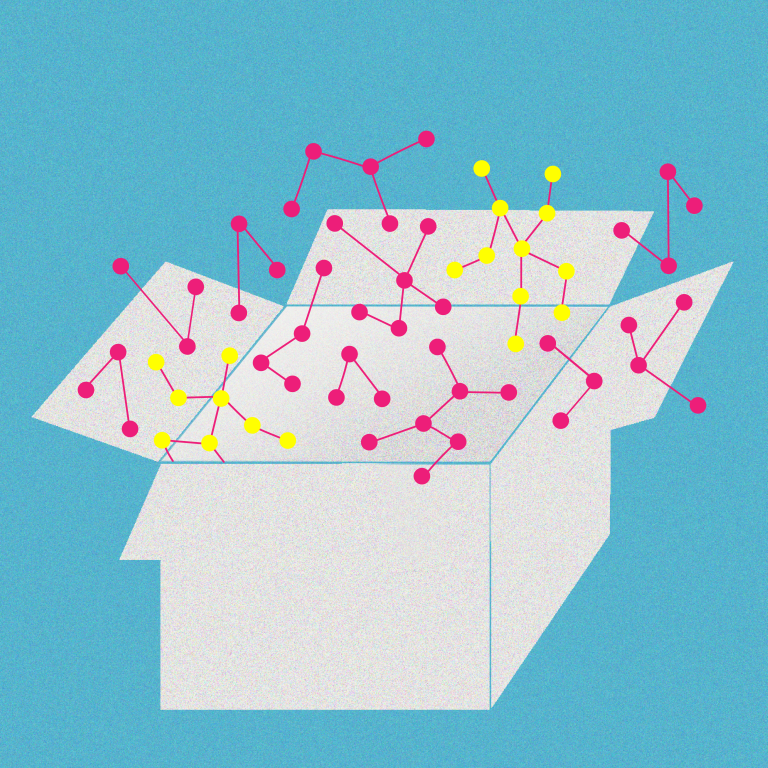
As we explored in one of our previous articles, the AI development as it stands today faces a fundamental dilemma. Systems that optimize for predetermined objectives can refine existing solutions but often struggle to generate genuinely novel, out-of-the-box approaches or navigate unprecedented scenarios. Meanwhile, the endless pursuit of bigger models and bigger data has trapped us in a computational arms race that may be moving us further from AI’s original promise.

On October 5th, 2025, the Artificial Life Institute officially launched in Kyoto with a group of forward-thinkers in search of an alternative path: artificial life (ALife), AI inspired by life itself, emphasizing open-endedness over optimization, plurality over singularity, and organic alignment over hierarchical control.
Organic Alignment: Nature’s Billion-Year Experiment
Organic alignment draws algorithmic inspiration from how natural systems have achieved balance over billions of years, rather than treating alignment as hierarchical control — steering AI behavior through constraints imposed from above.
Nature has been running this experiment for billions of years. Think about your own body: individual cells (muscle cells, nerve cells, liver cells) work toward a shared goal of keeping the organism alive and healthy. They don’t all do the same thing, but they support each other while interacting with one another. The result is something more than just a collection of cells: a living, breathing individual. The same is true of how animals form colonies and packs, and how trees create organically aligned collectives through mycelial networks. This pattern appears at every scale because it works, demonstrating alignment that evolves through mutual interdependence rather than imposed control.
Paraphrasing this eloquent description from Softmax, organic alignment occurs when individuals with mutual interdependence take on an overarching shared goal of the group’s healthy development. Here’s the key insight: true alignment isn’t imposed, it evolves. It’s a constant adaptive learning process.
Symbiotic AI for Digital Democracy
One promising (and urgent) pathway for organic alignment is in digital democracy. If we can build AI systems that coordinate rather than control, that help diverse groups discover shared goals rather than impose singular objectives, we can strengthen rather than undermine democratic institutions.
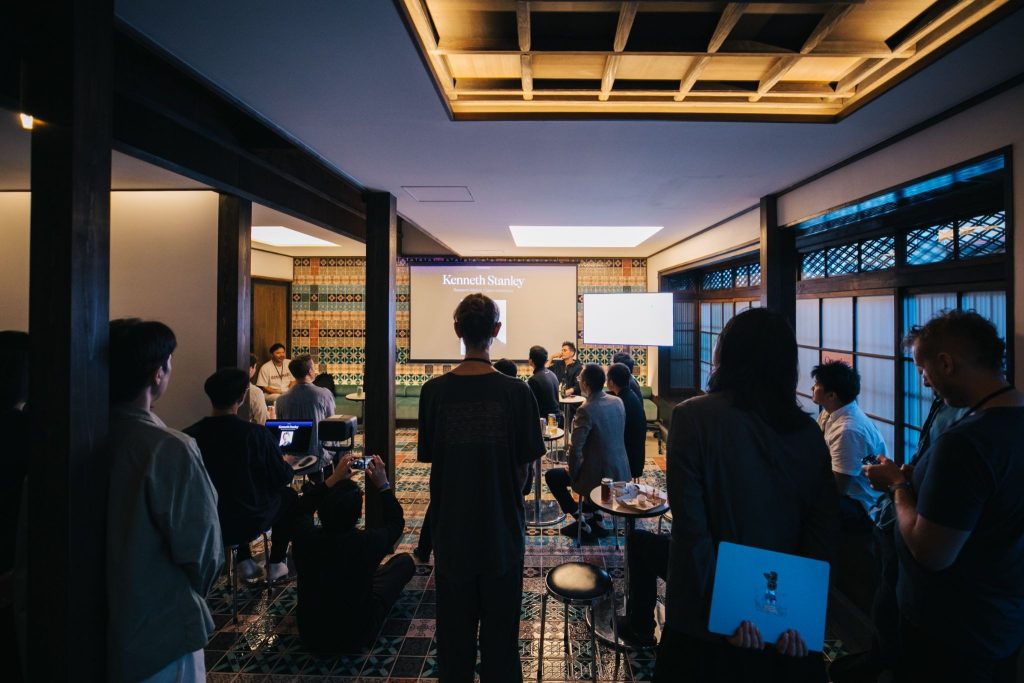
During the panel discussion on our Opening Day, Audrey Tang, Taiwan’s first digital minister, brought this into perspective with the concept of “parasitic AI,” a perfect description of social media recommendation systems. These systems thrive on reward hacking: engagement through enragement. Instead of sharing knowledge or aiding real understanding, they often exploit psychological vulnerabilities to maximize narrow objectives.
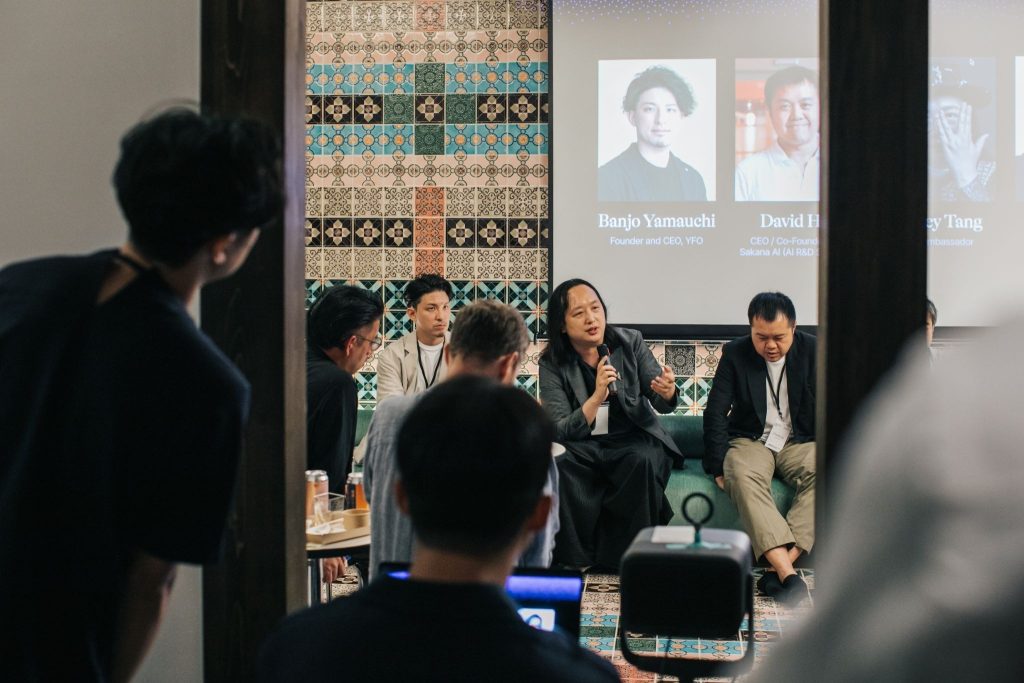
Audrey described our current moment as living in a “high PPM (polarization per minute) environment.” Many democratic societies around the world face advanced stages of this parasitic AI takeover.
“The idea of symbiosis is a direct counterpoint to parasitism. ALife principles, transformed into compilable code and working algorithms, can draw great attraction from all places facing high polarization.”
The solution isn’t content moderation or better fact-checking. It’s changing the underlying incentive structures, which can extend to giving virality to uncommon ground, rather than amplifying polarized extremes. This strongly calls for algorithms inspired by symbiosis, not parasitism.
Audrey’s work in Taiwan demonstrates this in practice. Through platforms like Pol.is, diverse communities surface shared values and discover unexpected agreement. The government doesn’t pretend to have all the answers. Instead, it creates platforms for collective intelligence to emerge organically.
This collaborative approach gives us a glimpse of organic alignment in action at a societal scale. As Audrey emphasized, in Taiwan “the relationship between government and citizens is horizontal, whereas governments in many countries try to create a vertical system.”
Coordination, Not Optimization
Our panelists seem to agree that the real problem isn’t optimization per se, but optimization paradigms that presume to know our goals better than we do. Open-endedness connects naturally to this vision. If we don’t know exactly where we’re going, and if we’re exploring rather than optimizing, then coordination becomes essential. We need systems that help diverse perspectives discover shared goals, not systems that impose singular objectives.
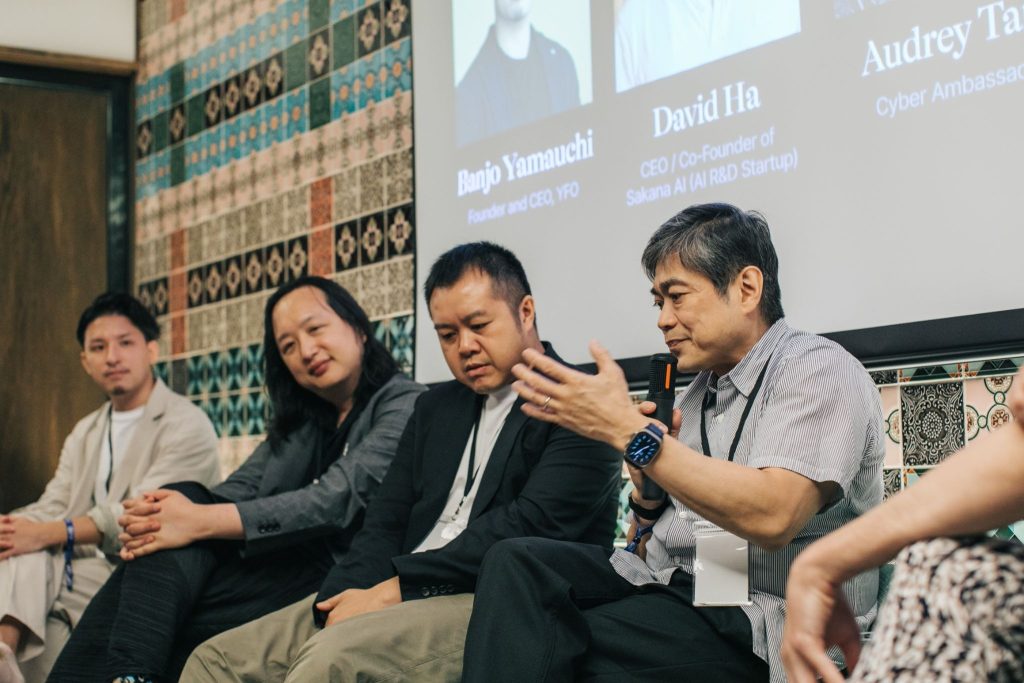
Joi Ito crystallized this shift in thinking:
“AI should help us coordinate, not optimize. Humans in lived experience should be describing what we want to do, and the optimization should be the optimized coordination of what we want, not telling us what we want.”
Kyoto, Japan: An Alternative Path
AI development has taken a troubling turn toward reductionism, reducing complex human values to objective functions that can simply be optimized toward narrow, often ill-considered goals.
This is where Japan’s alternative worldview becomes relevant, and why establishing the ALife Institute in Kyoto feels timely. As Ken Suzuki noted in his opening remarks, philosopher Takeshi Umehara articulated a non-anthropocentric philosophy drawing on Japan’s ancient traditions: “Mountains, rivers, and grasses all can attain Buddha.” It’s a view that sees consciousness and values distributed throughout nature, not concentrated in human intelligence alone. This philosophical perspective naturally aligns with artificial life research that seeks to understand “life as it could be,” not just “life as we know it,” enabling open-ended approaches where systems explore without privileging singular objectives or assuming humans must define all goals.
Joi Ito connected this philosophical foundation directly to Kyoto’s cultural practice: “There’s a search for interestingness in Kyoto. Tea ceremony flourishes when the world is interesting and tends to follow interesting people.” This isn’t about pursuing novelty for its own sake, but about staying genuinely open to what emerges—the kind of openness that resists the gravitational pull toward narrow optimization. For Banjo Yamauchi, representing the Nintendo founding family as seed donor, this approach resonates: “Research on how AI itself can evolve as life is very edgy and challenging, but very meaningful.”
A New Beginning in Kyoto
We stand at a crossroads in AI development. David Ha from Sakana AI put this into persepctive.
“I really want Japan to be part of the global AI conversation. Otherwise, we’ll end up with energy-burning large language models taking up all our resources.”
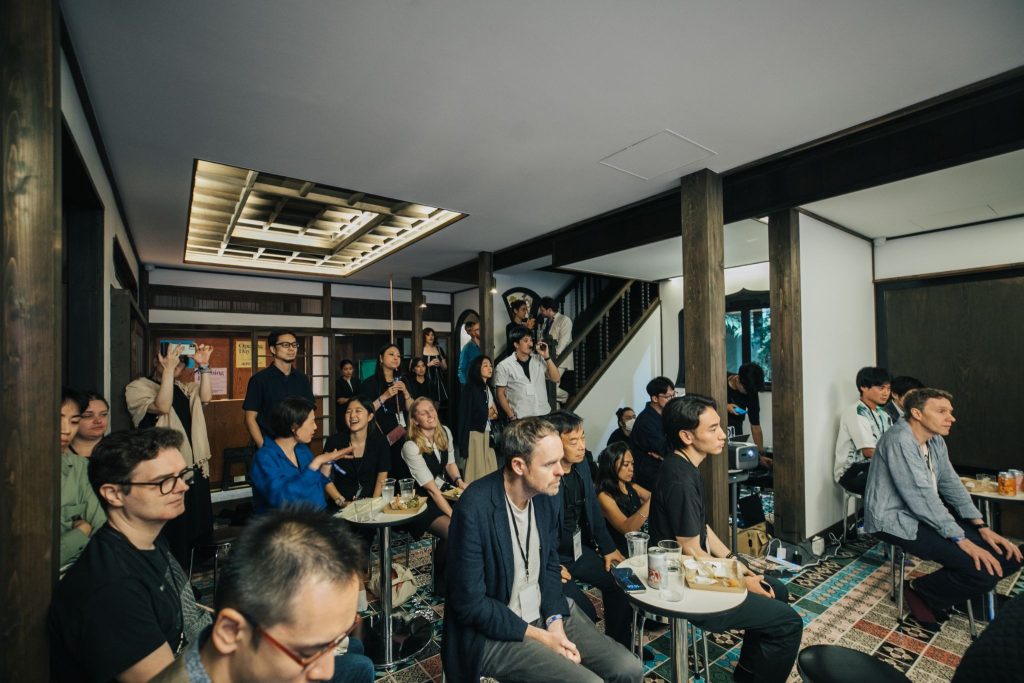
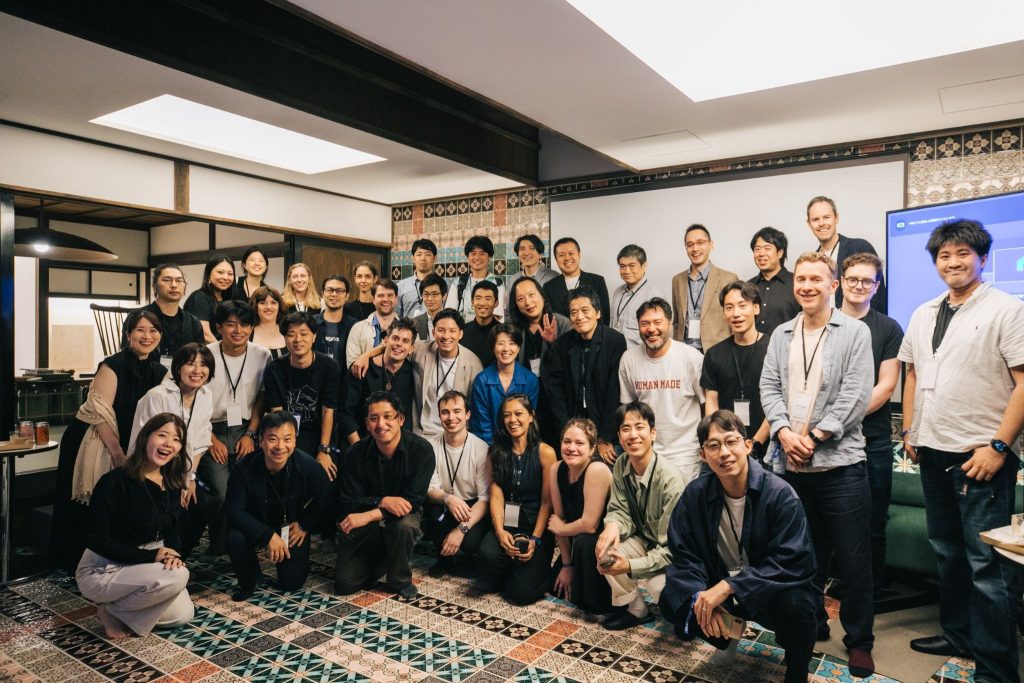
His hope is that artificial life could become Japan’s unique contribution to AI as an alternative ground for collaboration, energy consciousness, and the willingness to explore novelty. And this is the vision that drew 40 visionaries from all over the world to our Research House Kyoto for this special day.
The choices we make now will shape not just AI technology, but the societies these systems will inhabit. Will we double down on singular paradigms that seek to reduce human values to metrics, or will we create space for genuinely different approaches? The Artificial Life Institute’s opening in Kyoto represents a belief that the latter is possible—that there’s room for research driven by curiosity rather than quarterly returns, for systems that surprise us rather than simply scale up what we already know.
The journey ahead is uncertain, and that’s precisely the point. In Kyoto, where people think in millennia and tea ceremony flourishes when the world is interesting, perhaps we’ve found the right place to begin.
Joseph Park is a researcher at DAL (joseph@dalab.xyz)
Illustration: Soryung Seo